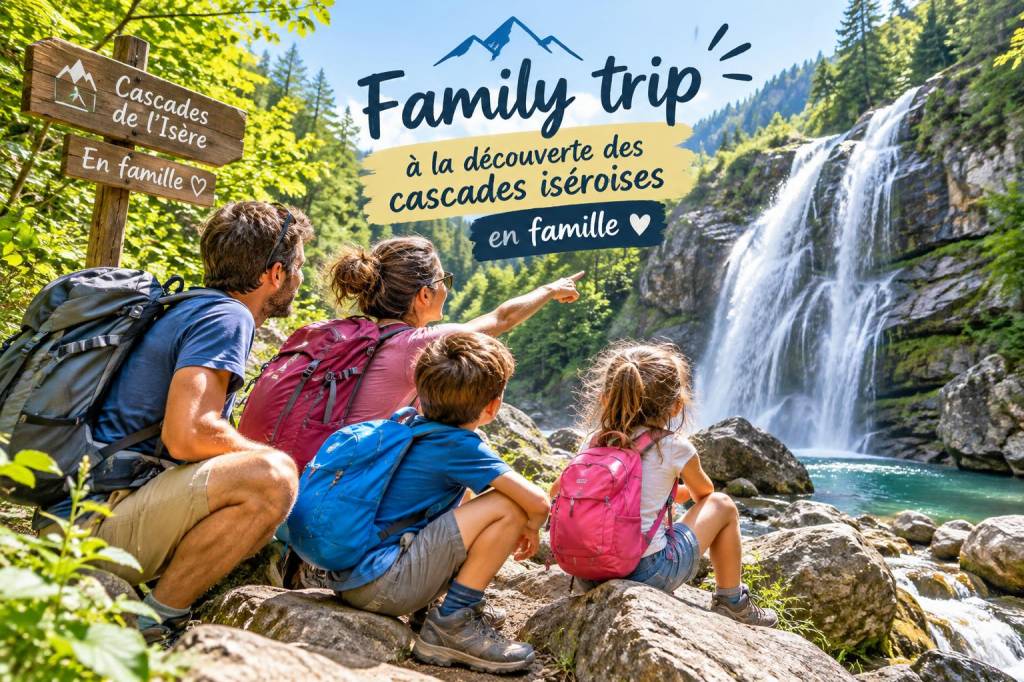
I have always liked waterfall days because they feel simple and generous: a short walk, cool mist on the skin, a picnic on a flat stone, and a reward that keeps children moving without feeling like a forced hike. When I plan a family outing in Isère, I look for routes with shaded paths, manageable elevation, and a clear turning point that keeps everyone curious. That is exactly why découvrir les cascades iséroises en famille makes such a strong outing idea for my own travel notebook.
For me, this kind of day works because it combines motion, scenery, and safety in a compact format. Isère has a mountain landscape that is dramatic without always being extreme, which means I can build a family plan around short walks, quick detours, and a few longer stops if the children still have energy. I like that I can shape the outing around ages, weather, and confidence level instead of forcing a single rigid route.
What I also appreciate is variety. In one part of the department, I can find a waterfall close to a village and a road; in another, I can reach a more secluded cascade after a forest path and a climb. That range matters when I am traveling with children, because a good family day is not only about the destination. It is about pacing, comfort, and keeping the mood light from start to finish.
Why I choose Isère for a family waterfall day
Isère sits in a landscape of valleys, plateaus, and alpine foothills, so waterfall walks often feel accessible without losing their mountain character. I like this balance. I can leave a town, drive a modest distance, and already feel the temperature drop as the path moves into shade and spray. That quick transition makes the outing feel special even before the water appears.
From a family perspective, I find three advantages especially valuable:
- Short approach walks: many waterfall trails can be done in under 3 km round trip.
- Flexible timing: I can build a half-day outing around a single site or combine two short stops.
- Natural rewards: children usually stay motivated when a visible landmark sits at the end of the path.
In practice, I aim for routes with moderate gradients, plenty of shade, and enough room to stop safely for photos or snacks. A family waterfall walk is not a race. I usually leave extra time for puddles, stones, insects, and the inevitable “one more minute by the water” request.
What I look for before I leave home
I always check conditions before a waterfall outing, because water levels and trail surfaces can change quickly after rain or snowmelt. I also prefer to verify whether the path is suitable for strollers, whether dogs are allowed, and whether there are barriers near steep sections. A route that looks short on a map can still feel difficult if the ground is wet or uneven.
My practical checklist is straightforward:
- trail length and total elevation gain
- surface type: forest track, stone path, or paved access
- weather and recent rainfall
- parking availability and arrival time
- shade, water access, and picnic spots
- local rules about swimming, drones, and leaving the path
I also keep an eye on seasonal flow. A waterfall can look spectacular after rain or snowmelt, but that same water can make rocks slick and stream crossings harder. In summer, I pay attention to heat, because a shaded waterfall path can still have exposed sections that children find tiring. I have learned that a successful family outing is usually the one where I prepare for comfort before I worry about distance.
My favorite family planning formula
When I design a waterfall day in Isère, I usually use a simple structure. It keeps the outing relaxed and prevents the day from becoming too long.
| Outing element | My usual target | Why it works for families |
|---|---|---|
| Drive time from base | 40 to 90 minutes | Long enough to feel like an escape, short enough to preserve energy |
| Walk length | 1.5 to 4 km round trip | Manageable for mixed ages |
| Walking time | 45 to 120 minutes | Leaves room for breaks, photos, and snacks |
| Elevation gain | 100 to 300 m | Enough effort to feel rewarding without overwhelming younger walkers |
| Stop duration at falls | 15 to 30 minutes | Plenty of time for observation and rest |
This kind of framework helps me compare routes quickly. If a trail exceeds my family’s comfort zone, I do not force it. I would rather choose a gentler path and end the day with smiles than chase a more ambitious route and spend the afternoon negotiating tired legs.
What makes a waterfall walk child-friendly in practice
I judge child-friendliness by more than distance. A route can be short and still feel stressful if the path is narrow, exposed, or slippery. For me, the most family-friendly waterfall walks in Isère usually share a few traits: clear signage, frequent tree cover, obvious rest points, and a satisfying end point that gives children a real sense of arrival.
Here are the elements I value most:
- simple navigation with few confusing junctions
- safe viewing areas near the waterfall
- natural features children can observe, such as moss, ferns, insects, and stream pools
- space for a snack without crowding other visitors
- an easy return path, ideally without awkward scrambling
I also think about motivation. On a good family route, I can turn the walk into a small mission: counting bridges, spotting butterflies, identifying rock layers, or listening for water before we see it. Those tiny tasks do not make the trail more complicated; they make it feel like an adventure.
What I pack for a family waterfall outing
My packing list stays light, but I never leave home empty-handed. Waterfalls create damp ground, cooler air, and sudden changes in terrain, so small practical items make a big difference.
- water for everyone, plus a little extra
- snacks that are easy to share
- light rain layers or windproof jackets
- closed shoes with a strong grip
- sun protection for open sections
- a small first-aid kit
- a dry bag for phones and camera gear
- trash bag for anything we carry in
I also like to bring a small towel if I expect spray, especially with children who insist on standing close to the viewpoint. Wet sleeves and cold hands can end a pleasant outing quickly, so I treat comfort like part of safety rather than a luxury.
Three source points I trust when I plan
When I research a route, I prefer to compare official and practical sources rather than rely on a single description. That habit has saved me from surprise closures, seasonal restrictions, and inaccurate time estimates.
- Isère tourism office: route notes, access information, and local recommendations.
- IGN maps: contour lines, trail geometry, and distance checks.
- Météo-France: rainfall, wind, and temperature forecasts before departure.
- French national park and protected area pages: seasonal rules and environmental reminders when a trail touches sensitive terrain.
For readers who like to verify details before leaving, those sources are a strong starting point. I always recommend cross-checking trail information with recent local updates, especially after storms or during peak holiday periods.
Responsible behavior I keep in mind near waterfalls
Waterfall areas can look rugged, but they are often delicate. Soil erosion, litter, off-trail shortcuts, and noise all add pressure to a place that already handles heavy seasonal use. I try to move through these spaces with care, especially when I am with children who mirror what I do.
My basic rules are simple:
- stay on marked paths
- do not climb barriers or wet rocks for a closer view
- take all rubbish back out
- keep noise low near other visitors and wildlife
- respect private land and local signage
- avoid swimming where it is not clearly allowed
I also think it is worth teaching children that a waterfall is not just a photo stop. It is a living place shaped by water, weather, plants, and geology. When I explain that a path can erode or a bank can collapse, children usually understand the need for caution much faster than when I simply say “do not go there.”
Questions I hear most often about family waterfall trips in Isère
Is every waterfall walk in Isère suitable for children? Not always. I filter routes by length, surface, and safety first. Some falls are easy to reach, while others require more stamina or sure footing.
Can I do a waterfall outing with younger children? Yes, if I choose a short route with limited elevation gain and safe viewing areas. I also build in plenty of rest time.
When is the most rewarding season? I like late spring for strong water flow and fresh greenery, and early autumn for cooler temperatures and softer light. Summer can work very well if I start early and choose shaded paths.
Do I need special equipment? Not usually, but sturdy footwear matters. A waterproof layer, snacks, and a simple navigation app are often enough for a short family outing.
How do I make the walk fun for children? I give them small tasks, let them set the pace for short stretches, and make the waterfall the clear reward at the end.
Useful references I use when checking routes
I like to keep a small reference list in my notes so I can verify access and conditions before traveling:
- Isère tourism resources: local walk descriptions and access updates
- IGN Géoportail: https://www.geoportail.gouv.fr
- Météo-France: https://meteofrance.com
- French environment and protected area information: https://www.ecologie.gouv.fr
- French national hiking federation: https://www.ffrandonnee.fr
When I plan carefully, a waterfall day in Isère becomes much more than a scenic stop. It becomes a family rhythm: drive, walk, listen, watch, snack, and return with a clear sense of having shared something memorable. That is why I keep returning to these routes whenever I want a day that feels fresh without being complicated.