I love nothing more than a spontaneous seafood supper after a day on the cliffs — pulling into Durness with the smell of the sea and the idea that dinner might be literally same-day from shore to skillet. Over the years I’ve learned where to buy truly fresh shellfish in and around Durness, how to check it’s safe, and the quickest ways to transport, store and cook it the same evening so it tastes like you’re still standing on the beach. Below I share everything I use and recommend, whether you’re buying from a local fisher, a shop, or foraging yourself.
Where to buy same-day shellfish in Durness
There are three reliable sources for same-day shellfish here: local fishers and boats, village shops and stalls, and — if you’re confident and legal about it — hand-gathered shellfish from the beaches. I always try to buy direct where possible because it supports the local community and often gives you the freshest product.
Local fishers and boats
If a small boat is tied up at the pier in Durness or at Balnakiel, don’t be shy — ask the skipper. Many fishers sell directly or will point you to someone who does. A polite chat often gets you scallops, langoustine and occasionally clams or crab landed that morning. Payment is usually cash, though some accept contactless via phone apps.
Shops and stalls
Look for fresh arrivals at local shops: the Durness Village Shop sometimes has limited daily catches, and during summer you may find pop-up stalls at the harbor or near Smoo Cave where crofters or fishers sell shellfish. If you’re staying in self-catering accommodation, ask your host — they often know who sells the best day-caught produce.
Foraging
I only recommend foraging if you know what you’re doing and follow local rules. Cockles, mussels and razor clams can be abundant on certain beaches, but there are strict size limits, seasons, and public health warnings to respect. If you’re unsure, ask a local ranger or crofter before collecting.
What to check before you buy
Freshness and safety matter more with shellfish than many other foods. I check these things every time:
How to transport shellfish same-day — my kit
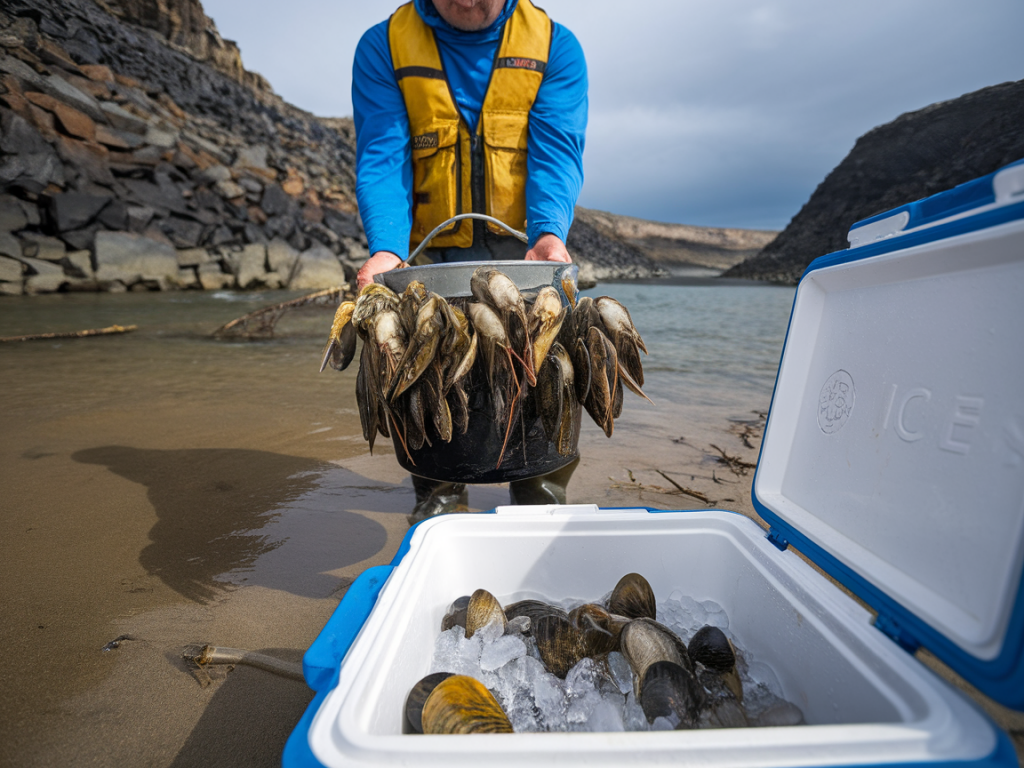
Transporting shellfish so they arrive at your cottage in prime condition is about temperature and ventilation. Here’s what I always have in the car or backpack when collecting or buying shellfish:
My routine: layer ice packs in the cooler, put shellfish in a ventilated container or paper bag above the ice (not in meltwater), and close the cooler. If it’s a short drive (under an hour), this is plenty. For longer journeys, refresh icepacks and check that bivalves remain closed and cool.
How to store until cooking — same day and overnight tips
If you plan to cook the shellfish the same evening, storage is simple:
For scallops and crustaceans (like langoustine or crab) that arrive cooked or raw, keep them chilled and use within the day. If buying pre-cooked shellfish from a stall, ask when they were cooked and how they’ve been chilled.
Quick same-evening cooking ideas
When I get back after a walk and want to cook what I bought that morning, I keep things simple and ingredient-led. A minimal approach keeps the sea flavor front and centre.
Steamed mussels in white wine (serves 2)
Seared scallops with butter and seaweed
Simple langoustine or crab butter
Safety checks before cooking wild shellfish
Never skip these safety steps:
Extras that make the meal feel like Durness
I like to pair my shellfish with local touches: fresh seaweeds for garnish (where legally gathered), a side of boiled Durness new potatoes, or a loaf from the village bakery. A simple salad of foraged samphire (only when permitted and properly identified) with lemon and olive oil adds wonderful texture.
If you’re following Hillside Durness Co for route and food tips, remember: buying local shellfish is about timing and respect for the sea. Ask questions, choose sellers you trust, and keep storage and cooking simple—let the North Coast speak for itself on the plate.