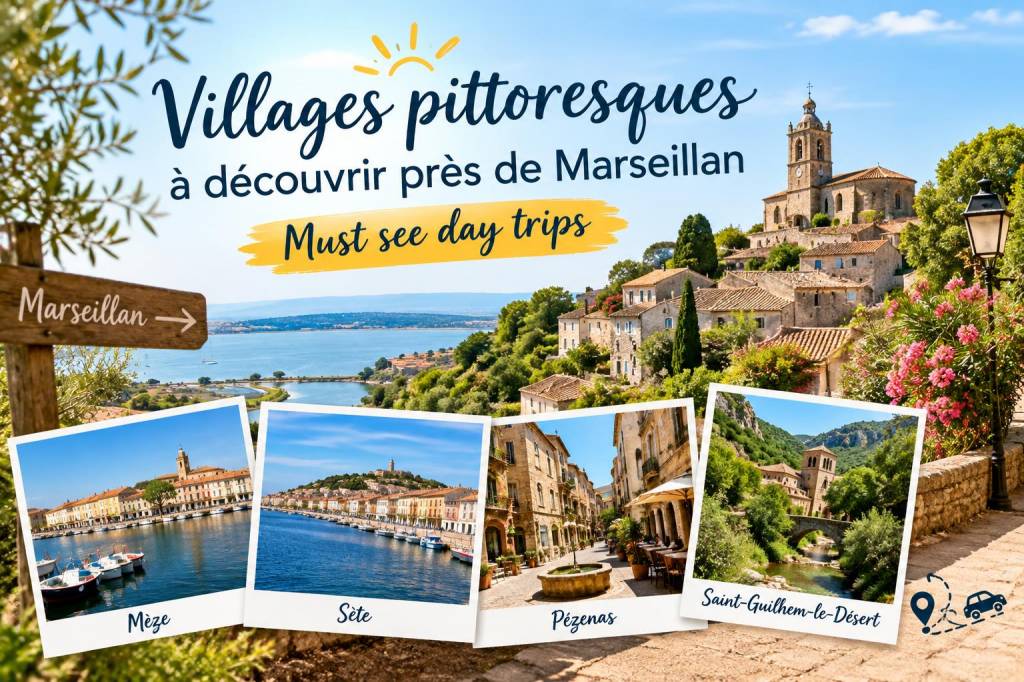
I love coastal light and quiet lanes as much as anyone who lives for the camera’s next good frame. When I’m based near Durness I’m often plotting far-off escapes, but some of my favourite days come from short drives and salty air — which is why I’m excited to share a personal guide to villages pittoresques à découvrir près de Marseillan. In this piece I’ll walk you through the villages I return to, practical logistics for day trips, photo tips, and a few local secrets I’ve gathered from conversations with shopkeepers and fishermen.
Why these villages near Marseillan deserve a day trip
I choose villages for their texture: narrow streets that hold the light, façades that tell of salt and sun, and cafés where locals will nod as you fumble with a camera. Within a roughly 45–60 minute drive from Marseillan, you can access multiple distinct atmospheres — from lagoon-side tranquillity to medieval hilltop charm. These short escapes are ideal for a day trip, and they’re especially rewarding if you’re into photography, slow travel and regional food.
Quick facts and stats
- Average driving time from Marseillan to the villages listed: 25–60 minutes.
- Number of recommended villages covered in this guide: 7 (hand-picked for photography and accessibility).
- Best seasons: spring and autumn for soft light, fewer crowds; summer for festivals and full harbour life.
- Population range: from about 400 to 5,000 residents (small, welcoming communities).
- Accessibility: most villages are reachable by car; a few have regional bus links (check local timetables via the Occitanie transport site).
My top picks: villages picturesque to discover near Marseillan
Below I share the villages I visit most often. Each entry includes the feel, why I photograph there, and practical tips.
Mèze — lagoon charm and oyster culture
Mèze sits on the Thau Lagoon and the fishing culture here is alive: crossing the harbour at golden hour offers reflections I chase with my wide-angle lenses. I love the seafood stalls by the quay and the oyster farmers’ boats — they make for decisive foreground interest in my compositions.
- Highlights: pier views, shellfish stalls, small maritime museum.
- Photo tip: shoot low from the quay at sunrise for mirrored water and moored boats.
- Practical: short walkable centre; cafés open early in summer.
Sète — canal-lined streets and dramatic viewpoints
Sète has an urban seaside character with canals and a working port. I tend to go when I want more variety in a single shoot: murals, fishermen mending nets, and a climb up Mont Saint-Clair for a sweeping panorama across the lagoon and Mediterranean.
- Highlights: Mont Saint‑Clair viewpoint, murals, lively markets.
- Photo tip: sunset from Mont Saint‑Clair shows the whole coastline in soft colours.
- Practical: more tourist services and parking, busy in high season.
Bouzigues — tiny and authentic
Bouzigues is a tiny oyster village with intimate alleys, low houses and direct access to the water. If you want intimate portraits of village life or close-up seafood stalls, this is the place.
- Highlights: oyster tables, tiny harbour, artisan stalls.
- Photo tip: a 50 mm lens works wonders for candid market shots and plate details.
Saint‑Pons-de-Thomières — a hilltop medieval surprise
Heading inland for a change of pace, Saint‑Pons-de-Thomières brings a medieval heart: stone streets, shaded squares and a quieter tempo. It’s a good contrast to the lagoon villages and shows the regional diversity within short drives.
- Highlights: cathedral, shaded cafés, old stone streets.
- Photo tip: use a longer lens to compress medieval streets and pick out architectural details.
Montagnac — wine country meets village life
Montagnac is surrounded by vineyards and has a charming market rhythm. I plan shoots here when I want rows of vines as leading lines into a village scene, especially around harvest time.
- Highlights: vineyards, weekly market, small wine producers.
- Photo tip: late afternoon for warm backlight through grape leaves.
Agde (Old Town / Le Grau d’Agde) — volcanic stone and seaside promenades
Agde’s black volcanic stone buildings are visually striking — an unusual palette in a region of pale limestone. Combine a stroll through the old town with time at Le Grau d’Agde for a varied day of shots.
- Highlights: Saint-Etienne Cathedral in basalt, riverside cafés, beach access.
- Photo tip: polariser filter helps manage reflections on basalt façades.
Table: at-a-glance comparison for planning day trips
| Village | Distance from Marseillan | Main draw | Best time to shoot | Travel time by car |
|---|---|---|---|---|
| Mèze | ~15 km | Lagoon/oysters | Sunrise | 20–25 mins |
| Sète | ~22 km | Canals/mont viewpoint | Sunset | 30 mins |
| Bouzigues | ~10 km | Oyster culture | Early morning | 15–20 mins |
| Saint‑Pons-de-Thomières | ~60 km | Medieval streets | Morning/afternoon | 50–60 mins |
| Montagnac | ~35 km | Vineyards/market | Late afternoon | 35–40 mins |
| Agde | ~25 km | Basalt architecture | Golden hour | 30–35 mins |
Logistics, timing and transport tips
For day trips I usually rent a car or use a small hire if I need extra gear. Driving gives flexibility — many of the viewpoints and small lanes are poorly served by buses. If you prefer public transport, check regional schedules (Occitanie/Tarn transport pages) and plan extra time for walking from the bus stop to village centres.
- Parking: arrive early (before 10:00) to find central spots without circling.
- Food: sample local oysters and bread in seaside villages — they’re often the best budget-friendly meals.
- Weather: coastal fog can create magical atmospheres but check forecasts and be ready to adapt.
Photography and storytelling tips
As a photographer I think in layers: foreground interest, a subject, and a background that provides context. For village portraiture, talk to people first, show a smile, and carry small change if you want to buy something from a stall — it’s the best way to earn trust and capture natural expressions.
- Bring a mix of lenses: 24–70mm for context and 50mm or 85mm for portraits.
- Use a tripod for low-light quay or interior shots; handheld IS works but a tripod helps with deliberate exposures.
- Respect privacy: always ask before photographing people up close.
Practical resources and further reading
Before you go, I consult local and regional resources for timetables, events and historical context. Three links I find reliable:
- France.fr — Occitanie tourism (regional highlights and events)
- Occitanie tourism site (transport and activities)
- Thau Lagoon — ecological and cultural overview (background on the lagoon ecosystem)
Safety and responsible travel
I travel lightly and try to leave places better than I found them. In the lagoon and coastal areas, watch where you step to protect eelgrass beds and breeding birds; when visiting vineyards and private properties, stick to public paths and ask permission if you’re unsure.
- Leave-no-trace: take litter with you, respect signage.
- Seasonal considerations: some lagoons and marshes have breeding seasons — avoid disturbing nesting birds.
- Local economy: eating at a small café or buying from a fisher supports villages that rely on tourism.
Further reading and sources I used while researching
- Occitanie Regional Tourism — practical transport and events information: https://www.tourisme-occitanie.com/
- France.fr — official tourism for the Occitanie region: https://www.france.fr/en/occitanie
- Thau Lagoon background and ecology: https://en.wikipedia.org/wiki/Thau_Lagoon
- Local village pages and municipal sites for event calendars and access — check each village’s official site for up-to-date opening times.