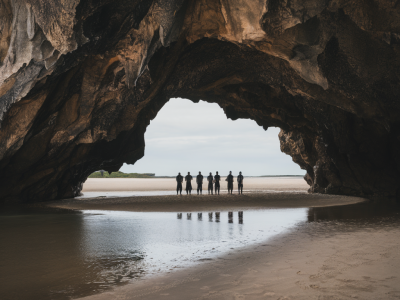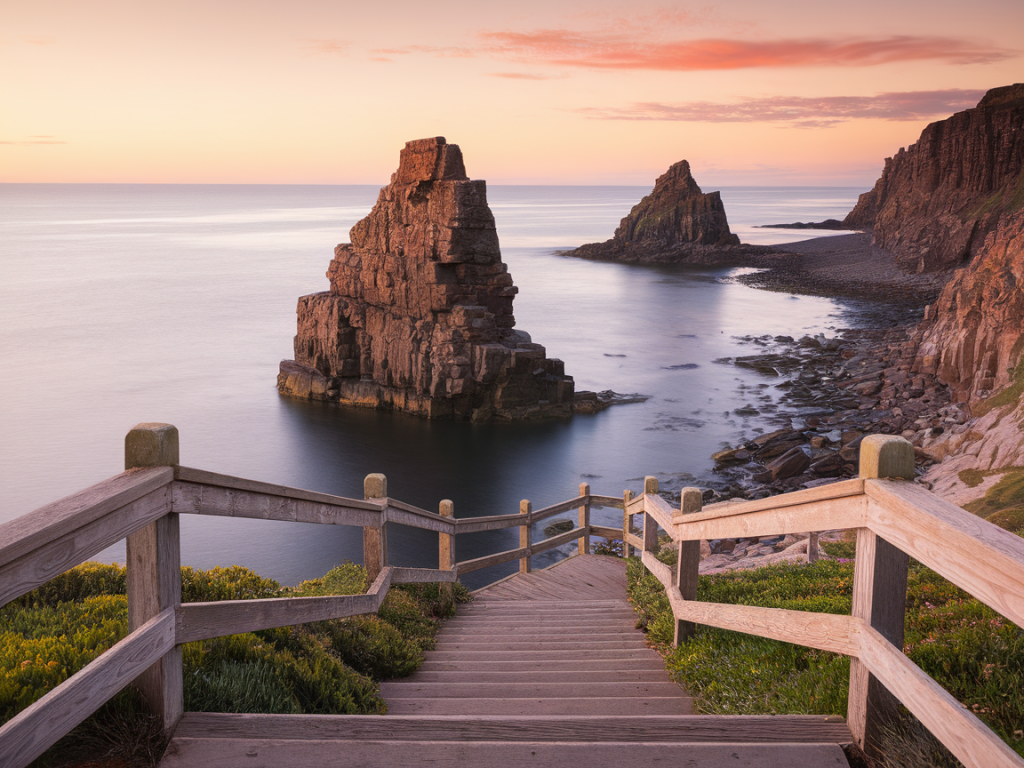
I’m drawn to Croick for the way the sea stack holds the light at dawn—those first rays carve the rock into layers and the whole headland feels hushed. Over the years I’ve chased many sunrises here and learned the practical bits that make or break a shoot: where to park before it’s busy, which approach gives you solitude (and which funnels you straight into a crowd), how to time the tide and the light, and small safety and leave-no-trace habits that keep this place special.
Why parking early matters (and how early is early?)
Arriving well before sunrise isn’t just about getting a good spot for your tripod. At Croick the narrow approach paths and limited roadside parking mean parking early prevents long walks along busy tracks with lights in your face, and it gives you time to scout compositions in fading starlight.
- I aim to be parked and on the path 45–60 minutes before sunrise for summer and 30–45 minutes in shoulder seasons. That gives me time to walk to the stack, set up, and compensate if the tide is running a little higher than expected.
- Windows for ideal low-tide foregrounds shift with the season—check tidal tables the day before and add buffer time if you plan to use exposed rock pools or lower platforms near the stack.
Where I park early (practical spots and pros/cons)
There are a few realistic parking options depending on how private you want the experience and how much you’re prepared to hike. Below is a quick reference table I use when planning.
| Spot | Approx. walk to sea stack | Pros | Cons |
|---|---|---|---|
| Layby on the A838 (north of Croick turn) | 15–25 mins | Shortest walk; popular for early photographers; easy if you have tripod and kit | Fills quickly; can be noisy if many cars arrive |
| Crofters’ lane parking (small pull-ins) | 20–35 mins | Quieter than main layby; scenic walk across croftland | Very narrow access; be respectful of gates and livestock |
| High road (setback, closer to Durness) | 35–50 mins | Best for solitude; less chance of bumping into crowds | Longer walk in the dark; requires warm layers and headlamp |
If you’re coming by rental car or campervan, remember roadside etiquette—do not block gates, leave room for local traffic, and avoid parking on soft verges. I always switch off my engine once parked to reduce noise and smell that can disturb wildlife.
Approaches that avoid cliff crowds
People tend to follow the obvious coastal path, which funnels most visitors into two or three viewpoints. If you want fewer people in your frame, try one of these alternatives I use regularly.
- Inland croft track approach: From the crofters’ lane, cut across the croft fields using stiles and designated paths. This route adds 10–15 minutes of walking but often grants the first clear line to the stack before others arrive. Wear gaiters in wetter months.
- High ridge route: Start from the higher road access and contour down along the ridge before descending to the foreshore. The descent is steeper, so good boots and poles help—but you’ll often arrive to find the main beach empty.
- Beach scramble (for experienced walkers): At very low tide, a rockier approach along the shoreline east of the stack can bring you in behind the main crowd. Only attempt this in calm conditions and with a clear tide plan.
Tide, light and composition tips I always check
I plan every Croick shoot around three numbers: sunrise time, high/low tide, and the angle of light. A little prep saves hours of scrambling.
- Use the Met Office or Magicseaweed for tides and Windy for wind and cloud cover. I mark the safe low-tide window on my phone the night before.
- For dramatic foregrounds and reflections, shoot around low tide—30–90 minutes either side depending on how exposed the rock platforms are.
- Golden hour light hits the stack differently through the year. In late spring and summer the sun comes up slightly farther north—this gives side light that sculpts the rock. In autumn, sunrise can be more frontal, great for silhouette shapes.
- Bring a graduated ND (e.g., Lee Filters or Nisi) for balanced exposures between sky and foreground, and an ND 6–10 stop if you want silky water around the stack.
Gear and camera settings that work for me
I don’t overpack for Croick—just sturdy boots, a small daypack, tripod, and a versatile lens set. My go-to kit:
- Camera body with good dynamic range (I use a full-frame mirrorless)
- 16–35mm for wide coastal shots; 70–200mm for compressed telephoto stacks and seabird detail
- Sturdy tripod and remote release
- ND and GND filters; lens cloth and weather protection
- Headlamp with a red light option (preserves night vision)
Settings: start around ISO 100, f/8–11 for sharpness, and adjust shutter speed to suit your ND/filter plan. Bracket exposures if the sky is dramatic—those extra frames save a sunrise.
Safety, wildlife and local courtesy
Safety here isn’t optional. Cliffs are crumbly, tides change fast, and breeding birds can be sensitive to disturbance.
- Tell someone your plan and estimated return time. I leave a quick message with my accommodation or a friend if I’m heading out before dawn.
- Keep to marked paths and avoid cliff edges, especially after rain when the turf is slippery.
- Respect bird restrictions—sandwich terns and fulmars sometimes nest on ledges from spring through summer. If signs request you keep back, keep back.
- Leave no trace: take all litter, avoid trampling sensitive vegetated areas, and close gates behind you.
If you don’t want to drive
Public transport to Durness is limited, so if you’re relying on buses, plan a pickup or taxi for the early return. I’ve met photographers who arrange a drop-off/pick-up with a local taxi firm the night before—that’s a quiet, low-stress way to handle pre-dawn starts without worrying about parking availability.
Finally, bring patience. Even when the dawn is grey, the sea and stack have moods that reward waiting. I’ve had some of my favourite frames come from ten minutes after I thought the light was done—so set up, breathe, and keep your camera ready.