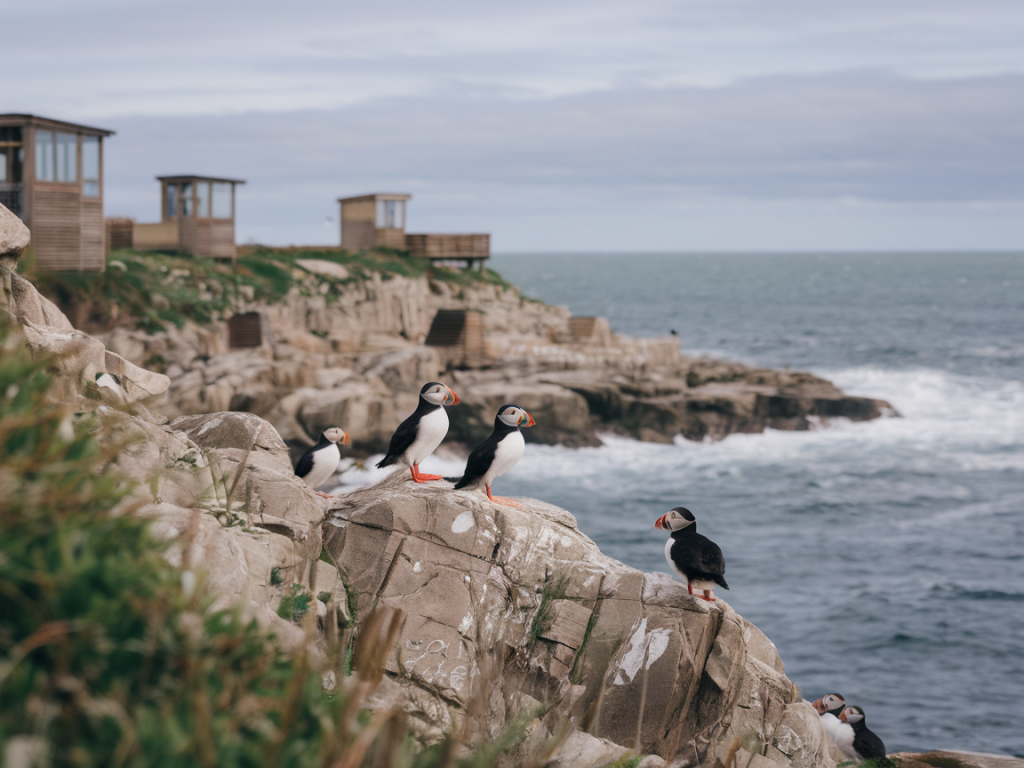
I still remember my first puffin sighting near Durness—a tiny triangular face popping out of a cliff-top burrow, bright beak gleaming against a slate sky. It was one of those small, stubborn moments that make you fall in love with the north coast all over again. Over the years I’ve chased puffins across sea cliffs, sat in hides until my knees complained, and learned the rhythms that make these birds easier to find. Below I share where I go to watch puffins near Durness, practical hide and boat options, the best times to visit, and my kit tips (binoculars, camera settings, and what to leave at home).
Where to see puffins around Durness
Puffins breed on offshore stacks and grassy cliff tops along the north-west coast. The nearest reliably good sites to Durness are small and discrete—some are best viewed from hides or headlands, others from boat trips that circle stacks. Here are the places I return to most often:
- Henderson’s Point / nearby headlands – A short drive from Durness, this area gives access to coastal headlands where you can scan offshore stacks through binoculars. Not a formal hide, but often quiet and great for a contemplative watch.
- Sango Sands viewpoint – While more famous for its beach, I’ve watched puffins flying past the headlands from higher ground here on calm days. It’s a flexible option if you’re combining beach time and wildlife watching.
- Boat trips from Durness harbour (seasonal) – Local boat operators run spring and summer trips to skirt the stacks and sea cliffs. From the water you can approach naturally used puffin colonies at a respectful distance.
- Nearby colonies (accessible on foot) – Some smaller colonies are accessed by walking established paths; always stick to marked routes to protect nesting birds and fragile turf.
Viewing hides and organized options
There aren’t many large visitor hides like you find at national wildlife centres, but local rangers and outfitters sometimes set up seasonal hides or guided watches. Here’s what I recommend checking before you go:
- Look for short-term hides or viewing platforms set up by conservation groups—these pop up most years during breeding season when volunteers monitor colonies.
- Book a guided boat tour through an approved local operator. Onshore viewing can be limited by terrain and distance; boats give you a much closer, often more rewarding perspective while keeping disturbance minimal if the skipper follows guidelines.
- Contact the local ranger or visitor information at Durness to ask about current hides or monitoring programs—the community here is small and helpful, and they’ll point you to any temporary hides and access arrangements.
Best times to watch
Puffins have a fairly short window on land. Knowing their seasonal habits makes a big difference in whether you see them or not:
- Breeding season: late April to early August is the key period. Peak numbers are usually in May and June.
- Best time of day: early morning and late evening. Puffins return to and depart from burrows at dawn and dusk, and light is gentler then—ideal for photography and observation.
- Weather: calm, clear days make puffin-watching easiest. On very windy, rainy days puffins tend to stay near burrows or sit low on the water, making them harder to spot.
How to approach—ethics and access
Respecting puffins and their habitat is non-negotiable. I always follow these rules and ask readers to do the same:
- Keep distance from burrows and cliff edges—avoid trampling turf. Use binoculars and telephoto lenses rather than trying to get physically close.
- Stay on marked paths. Puffins nest in turf and moorland that can be easily damaged; a few footsteps make a long-term difference.
- Turn off drones. Drones cause huge stress to seabirds and are often illegal near colonies.
- Minimise noise and movement. Even low-key chatter can flush birds from flight paths or burrows.
Binoculars and optics—what I use and why
Good optics transform a frustrating squint into a proper wildlife encounter. I carry both binoculars and a camera with a long lens. Here’s my practical gear advice:
- Binoculars: I recommend a 8x42 or 10x42 for coastal birdwatching. The 8x42 gives steadier wide-field views; 10x42 offers more reach if you’re viewing from headlands. Brands I trust: Vortex Diamondback HD, Nikon Monarch, and Zeiss Terra ED (higher budget).
- Spotting scope: If you have access to one, a 20–60x spotting scope on a tripod is ideal for watching distant stacks from headlands or hides.
- Camera: For photography, a DSLR or mirrorless with a 300–600mm equivalent focal length works well. I usually shoot with a 400mm f/5.6 or a 100–400mm zoom on a crop body for extra reach. Use a beanbag or tripod when possible to steady shots.
Camera settings and photography tips
When you’re trying to photograph puffins in flight or carrying sand eels, a few settings make the difference between a blurred mess and a keeper:
- Shutter speed: aim for at least 1/1000s for flying birds, slower (1/500s) for perched puffins if you have a stable support.
- Aperture: f/5.6–f/8 gives a good balance of light and depth of field while keeping the bird sharp.
- ISO: push ISO as needed to maintain shutter speed—modern cameras handle ISO 800–1600 well in our light.
- Focus mode: continuous AF (AF-C) with a small focus area or tracking mode helps keep flying puffins sharp.
- Composition: include cliff or sea context to show scale—puffins are small, and a little landscape helps tell the story.
Where to park and practical walk notes
Parking is limited around minor headlands. I usually arrive early to secure a spot, and always carry a small daypack with waterproofs because weather changes fast here. A few practical tips:
- Wear grippy boots—turf and bog can be slippery after rain.
- Bring layers and waterproofs even on sunny mornings; sea spray and wind cool quickly.
- Check tide and wind forecasts—calm seas make boat trips and headland viewing much better.
Quick comparison of viewing spots
| Location | Access | Viewing quality | Notes |
|---|---|---|---|
| Henderson’s Point / headlands | Car + short walk | Good for distant views, safer turf | Best at dawn/dusk; bring binoculars or scope |
| Sango Sands viewpoint | Car, easy access | Moderate—depends on sea conditions | Combine with beach visit; flexible option |
| Boat trips | Book through local operator | Excellent—closer views while afloat | Operator ethics important—choose licensed skippers |
| Smaller on-foot colonies | Walk on marked paths | Very good if you reach bluffs | Respect signs and avoid nesting areas |
Extra notes from the field
One tip I repeat to everyone who asks: patience wins. On a late-June evening I sat behind a low berm for nearly two hours and watched puffins ferrying sandeels into burrows—one after another, perfectly choreographed. It’s not dramatic every minute, but the slow, repeating scenes are what make a watch memorable.
If you’re travelling from farther afield, combine puffin watching with other coastal wildlife—guillemots, razorbills and kittiwakes share the cliffs, and sometimes you’ll see seals or basking sharks offshore. And if you want local advice, drop me a note at Hillside Durness Co via the contact page at https://www.hillside-durness.co.uk—I’ll happily share current sightings, boat operator contacts, and any temporary hides rangers have set up.