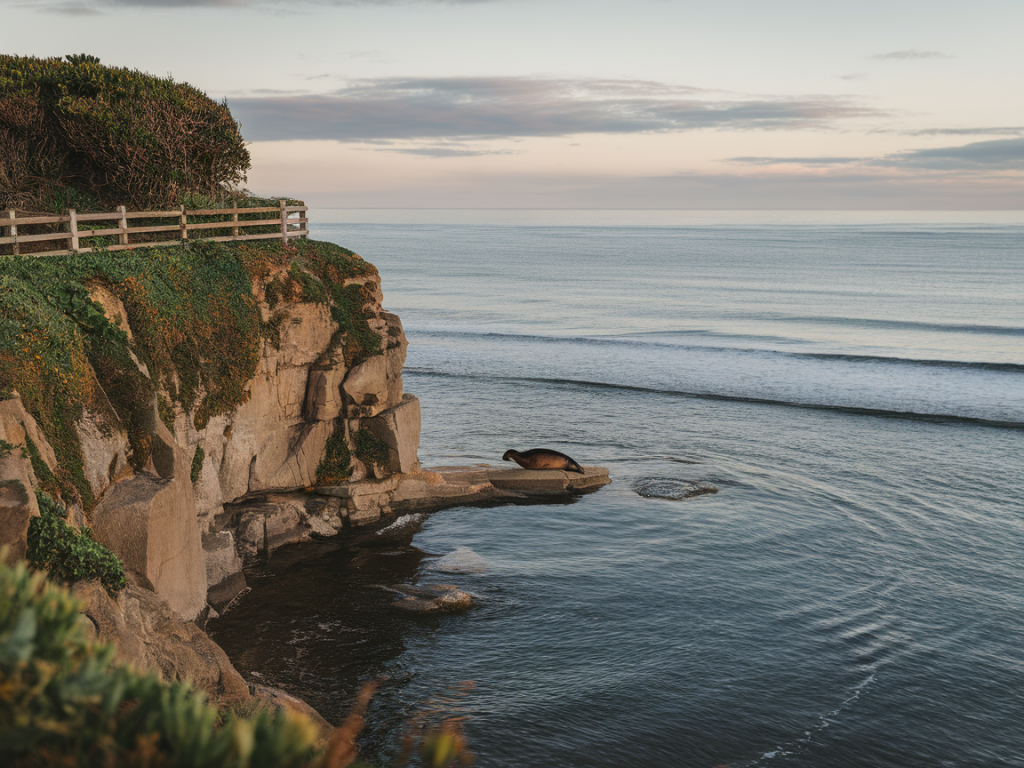
From the clifftop between Camel Haugh and Enamel Bay, watching seals is one of the quietest, most rewarding ways to feel connected to this coastline. Over the years I’ve learned to read the rocks, the tide, and a pup’s posture the way others read a map. Below I’ve gathered the practical binocular tricks, seasonal cues and behaviour notes that help me identify juvenile seals from the cliff without disturbing them — what to look for, when to visit, and how to capture the moment safely and responsibly.
Why this stretch is good for seal-watching
Camel Haugh to Enamel Bay gives a mix of rocky skerries, sandy pockets and wide tidal foreshore. That variety attracts both adults and pups looking for safe haul-out sites and sheltered waters to practise swimming. From the clifftop you get a natural vantage point: a little elevation helps separate subjects from the clutter of rock and sea, and you can track movement across the bay without walking down to sensitive areas.
Which species you’ll most likely see
On this coast the two species you might encounter are the grey seal (Halichoerus grypus) and the harbour/ common seal (Phoca vitulina). Both appear as “puppies” at different times of year and with different behaviours.
- Grey seals: larger, long-nosed, often haul out on rocky skerries. Pups are white when born (the lanugo coat) and then develop the adult spotted pattern as they moult.
- Harbour seals: smaller, shorter face, often favour sandy beaches and lower rocks. Pups are born with a darker, downy coat and are more likely to slip into the water soon after birth.
Seasonal cues: when to expect juveniles
Timing is the most reliable clue. From the clifftop, knowing the calendar helps you decide what you’re likely to see and how to behave.
| Species | Pupping season | Juvenile cues from cliff |
|---|---|---|
| Grey seal | Primarily Sept–Dec (peaks vary locally) | White pups on rocks in autumn, clusters of adults on skerries, pups weaning then first entries into sea in late autumn |
| Harbour seal | May–July | Pups on sand or low rocks, more likely to take to water quickly, smaller group sizes |
Keep in mind local variation — weather and tides shift timing — but if you visit in early autumn you’re most likely to glimpse newly born grey seal pups; mid-summer favours harbour seal pups.
How to identify a juvenile from distance
Use a combination of size, coat, posture and behaviour. From the cliff you won’t always get close-up detail, so build the picture from several cues.
- Coat/colour: a stark white, fluffy pup is almost certainly a newborn grey seal in lanugo. A mottled, spotted coat suggests an older grey or an adult. A small, darker downy pup is likely a harbour seal.
- Shape: juveniles have proportionally larger heads and rounder bodies than adults; they often look “plumper” because of blubber and lanugo.
- Posture: pups rest curled or splayed on sand/rock. If a pup is curled with its head tucked it’s probably nursing or resting; alert upright heads may indicate disturbance.
- Movement: harbour seal pups often slip away into the water sooner; grey seal pups may stay longer onshore during the early days while they nurse.
- Accompanying adults: a close adult nearby, especially watching or nudging, suggests a pup that’s still dependent.
Binocular and optics tricks that make a difference
Good optics let you watch details without approaching. I carry a compact pair of 8x42 binoculars for general viewing and a spotting scope for close study when I plan a session.
- Start with 8x–10x binoculars: they’re stable handheld and great for scanning. Brands I often use: Nikon Monarch or Swarovski CL for clarity; but mid-range Vortex or Zeiss Terra are excellent too.
- Use a spotting scope for detail: a 20–60x scope on a lightweight tripod will show coat texture and tiny behaviours. I use a tripod with a fluid head so small movements stay smooth.
- Stabilise your view: press binoculars to your forehead, tuck elbows in, or brace against a rock or fence post. If you have a beanbag or small tripod, those help a lot on windy days.
- Digiscoping: attach your phone to the scope with a coupler (single-brand solutions like Gosky or universal adapters work well). You can capture behaviour sequences without getting closer.
- Focus technique: pick a fixed rock or the seal’s head to focus; once you have that point sharp you can track small movements more easily than refocusing constantly.
Behavioural signs of disturbance to watch for
Seals are easily frightened. From the clifftop you may think you’re far enough, but noise and movement can still carry down. Signs of disturbance include:
- Adults turning quickly towards humans, calling, or exhibiting erratic movement
- Pups sliding into water or running across beach
- Long, repeated vocalising
If you see any of these, back away and give the animals more space — even retreating a few metres along the cliff path reduces impact. As a rule I aim for at least 100 metres from pups; more if the site is enclosed. If you’re unsure, err on the side of caution.
Practical checklist for a responsible clifftop session
- Check tides and weather — low tide exposes more haul-out sites but also concentrates animals; strong wind increases noise/autumn storms can affect visibility.
- Binoculars or scope plus a headlamp for late afternoon returns.
- Phone with digiscoping adapter if you want photos, and spare battery.
- Layered clothing, waterproofs and sturdy boots — clifftops are exposed.
- A small notebook or voice memo app to record location, number of pups and behaviour (I log date, time, spot and any odd behaviour for later reference).
Photography tips without intruding
From the cliff you can get beautiful portraits of pups against rock or sea. Keep telephoto lenses on a tripod, watch light angles, and prioritise behaviour over “perfect” composition:
- Use a 300mm+ lens or digiscope setup to avoid walking down the foreshore.
- Shoot in RAW if possible to recover highlights and shadow in backlit scenes — the low sun at golden hour gives lovely rim light on fur.
- Check exposure compensation for white pups (they can fool meters and appear grey); dial in +1/3 to +1 stop as needed.
- Be patient: some of my best sequences came from staying still and letting seals relax and yawn or groom.
Note on safety and conservation
Never handle or attempt to rescue a pup unless directed by an authorised wildlife professional. Newborn grey seal pups may appear abandoned, but mothers often leave briefly to feed. Disturbance increases the risk of separation and can hamper a pup’s ability to survive.
Report obviously injured or emaciated animals to the local seal rescue or the Scottish SPCA/RSPCA wildlife hotline — but only from a safe, non-intrusive distance. In my experience, keeping a log of what you saw and the exact location helps responders more than hurried, close approaches.
Watching juvenile seals from the clifftop between Camel Haugh and Enamel Bay is a quiet art: combine seasonal knowledge, a steady pair of optics and a respectful mindset and you’ll see behaviour and details most visitors miss. Bring patience, dress for the weather, and let the coastline reveal its rhythms on its own terms.