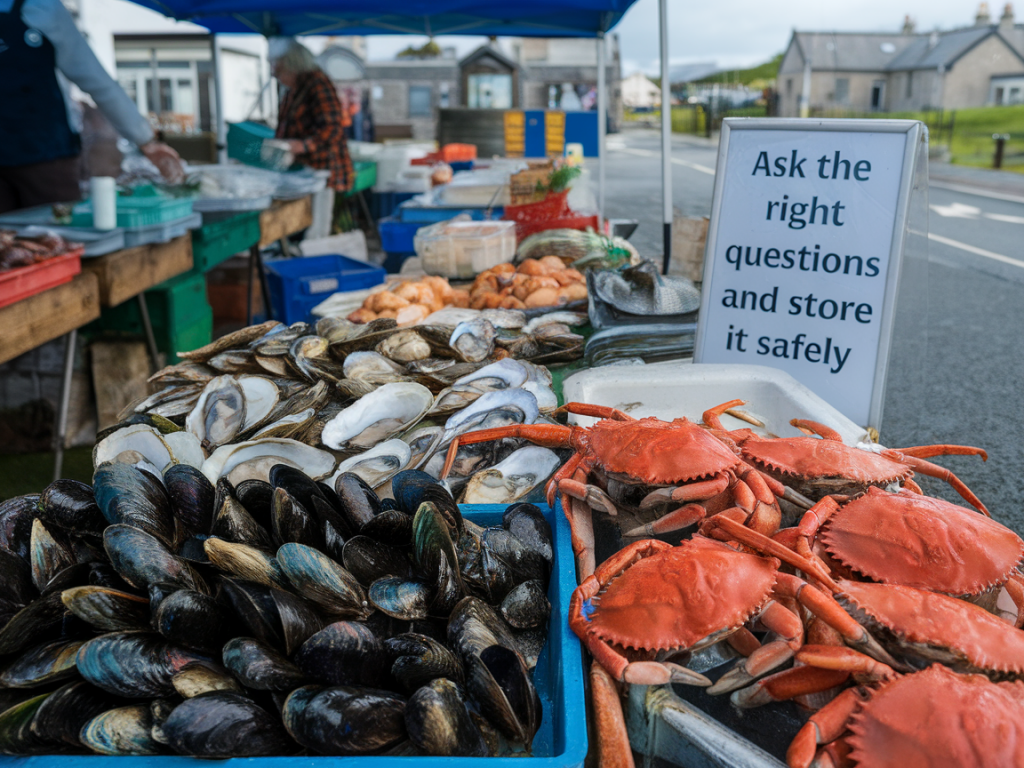
I buy a lot of shellfish directly from crofters here in and around Durness. Over the years I’ve learned that fresh shellfish is not just about catching the tide at the right moment — it’s about asking a few smart questions, reading the shellfish itself, and handling it properly once you’re home. Below I share the practical, slightly picky checklist I use every time I buy from a crofter, plus simple safety steps for storing and preparing your haul so dinner tastes like the coast and not like a risk.
Where I find crofters and how to approach them
In Sutherland many crofters sell surplus shellfish directly from their crofts, at small roadside stalls, or by arrangement via phone or text. I usually meet people at the croft gate, in a small village shop, or at a local market. When I’m out photographing a beach I’ll often ask a crofter I’ve met previously whether they’ve collected anything that morning — a polite conversation goes a long way.
When you approach a crofter, be friendly and clear: tell them what you’d like (mussels, clams, scallops, whelks, razor clams) and ask if the shellfish was harvested that day. Most crofters are proud of their harvests and happy to answer questions — and if a seller seems evasive about where/when the shellfish was taken, it’s a warning sign for me.
Essential questions to ask (and why they matter)
- When were these harvested? The fresher, the better. Ideally the shellfish should have been dug or lifted that morning. If it was harvested 48 hours ago, ask how it’s been kept chilled.
- Where exactly were they taken? Ask for the bay/strand name. Some areas have seasonal biotoxin or pollution concerns; knowing the location helps you check local alerts via Food Standards Scotland or Marine Scotland if you’re unsure.
- How were they stored on the croft? Ideally in a cool, shaded place on ice or in chilled seawater. If they’ve been left in a warm car or sitting in the sun, they may be compromised.
- Any tags or traceability notes? In commercial systems, bivalves usually come with traceability tags. For small-scale crofters there may not be a formal tag, but they should be able to tell you the harvest time and exact site. If you’re buying larger quantities, ask for any paperwork.
- Do they recommend any shellfish to avoid right now? Local knowledge is golden: crofters know which beds have worms, sand, or are off-limits during certain months.
- How do they suggest storing and cooking them? Good crofters will happily tell you how they keep their catch fresh and their favourite way to cook it.
What I look for when inspecting shellfish
Even if the seller is trusted, I always inspect. The simple visual and tactile checks take a minute and can save a ruined meal or worse:
- Live bivalves: shells should be closed or snap shut if tapped. Open shells that don’t close are dead — don’t buy them.
- Smell: a clean sea smell is good; a strong, fishy or rotten odour is bad.
- Shell condition: heavy fouling (barnacles, broken shells) isn’t a safety issue but can signal older stock or rough storage.
- Whelks and winkles: should be active and retract into their shell if disturbed.
- Scallops: muscle should be plump and not slimy; a cloudiness can indicate old flesh.
Legal and safety flags to know
A few practical legal and environmental points to bear in mind:
- There are closures and biotoxin alerts: check Food Standards Scotland (FSS) or Marine Scotland for warnings about amnesic or paralytic shellfish toxins. Crofters usually know about local monitoring, but it’s worth confirming if you’re buying for a group.
- Know the size and bag limits for certain species. Taking is regulated in places; crofters selling legally will respect those limits.
- Buying “wild” shellfish from a private seller still places responsibility on you to ensure it’s safe to eat. If it smells wrong or the seller can’t say where it came from, don’t buy it.
How I transport and store shellfish safely
Once I’ve paid for my bag, the race begins to keep them cold. Here’s my routine — it’s simple and works whether I’m driving 10 minutes or two hours back to the cottage:
- Keep shellfish cool and shaded in an insulated bag or cooler. I use a small soft coolbox and reusable ice packs (think: Arctic Zone or Igloo-style packs).
- Never store live bivalves submerged in freshwater — it will kill them. Store them in a ventilated container with damp paper towels or seaweed on top, or in a cooler with ice packs separated by a tray so they’re kept cool but not in fresh meltwater.
- Keep the temperature as close to 0–4°C as possible. Don’t freeze live bivalves — they’ll die.
- If you plan to keep shellfish more than a day, vacuum-sealing cooked portions or shucking and freezing meats is safer.
| Shellfish | Storage: live, chilled | Storage: shucked/cooked (fridge) | Freezing |
|---|---|---|---|
| Mussels, clams, cockles | 24–48 hours (best day of harvest) | 2 days | Cooked: 2–3 months (seal well) |
| Scallops | 24 hours (whole) | 1–2 days | Raw: OK but texture changes; cooked: 2–3 months |
| Whelks, winkles | 48 hours (kept cool) | 2–3 days | Cooked: 2–3 months |
These are practical windows — if in doubt, eat sooner. If a bivalve opens when you handle it before cooking and doesn’t close, throw it away. When in doubt, don’t risk it.
How I clean and prepare common shellfish
Quick notes that have saved me from sandy mouths and rubbery scallops:
- Mussels: scrub shells, de-beard, rinse quickly in cold seawater or salted water. Do not soak for hours or they’ll die and spoil tastes.
- Clams and cockles: soak in salted water for 20–60 minutes to encourage sand to be expelled, changing the water once if it’s full of grit.
- Razor clams: soak and then clean the innards out carefully; their texture is delicate — quick cooking is best.
- Whelks/winkles: boil then remove from shell, or buy pre-peeled if you prefer.
- Scallops: remove the roe and gut if present, rinse and pat dry — quick searing is the best way to preserve their tenderness.
Cooking tips I learned from crofters
Some local favourites I always ask about:
- Simple steamed mussels: white wine, garlic, parsley — short cook time keeps them sweet and briny.
- Razor clams with butter and lemon: quick sear, don’t overcook or they go tough.
- Scallops in butter and thyme: 30–45 seconds per side on a very hot pan gives a golden crust and silky interior.
- Periwinkle terrine: the crofters taught me careful shell-picking and a long slow simmer to tenderize winkles.
Buying shellfish from crofters is one of those small travel pleasures: a short chat, a scent of the sea, and a dish that tastes unmistakably of place. Ask the right questions, keep things cold, and treat live bivalves gently — they’ll reward you with some of the best flavours the north coast has to offer.