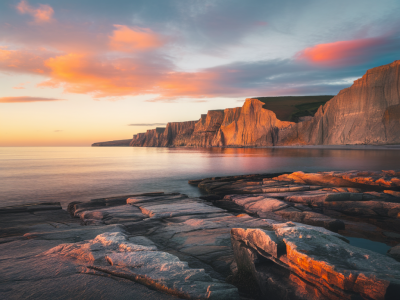
I know the pull of Sango Bay—the way the cliffs glow at golden hour, the yellow turf leading your eye to a sweep of sand and the sea beyond. My favourite way to savour that coastline is the walk from Sango Bay to Camel Haugh, a compact route that feels remote and richly alive. It’s short enough for a relaxed morning or late-afternoon stroll, but full of viewpoints, seabird life and, often, harbour seals hauled out on skerries or popping their heads above the swell. I’ll walk you through the route, how to spot and respect seals, what to pack, and a few photography tips to help you bring the place home with you.
The route at a glance
From the Sango Bay car park the path winds west along high grassy cliffs, drops to sandy coves and climbs again toward the headland of Camel Haugh. The walking is straightforward but often uneven underfoot—expect peaty grass, occasional sheep tracks and a few rocky steps where the ground dips to inlet beaches.
| Distance | Approx. 3–4 km one way (6–8 km return depending on detours) |
| Time | 1.5–3 hours return (photography and seal-watching will add time) |
| Difficulty | Easy–moderate: some steep short sections, no technical scrambling |
| Terrain | Coastal path, grass, sand, rock; can be muddy after rain |
How to get there
Drive or cycle to the small car park at Sango Bay (signposted off the A838). Bus services are limited; if you’re relying on public transport, check the latest timetables from Durness. I often arrive early to catch the calm morning light and avoid the short-lived mid-day wind that can whip across the headland.
What to bring
I travel light but prepared. Here’s my go-to kit for this walk:
Seal-spotting: when and where
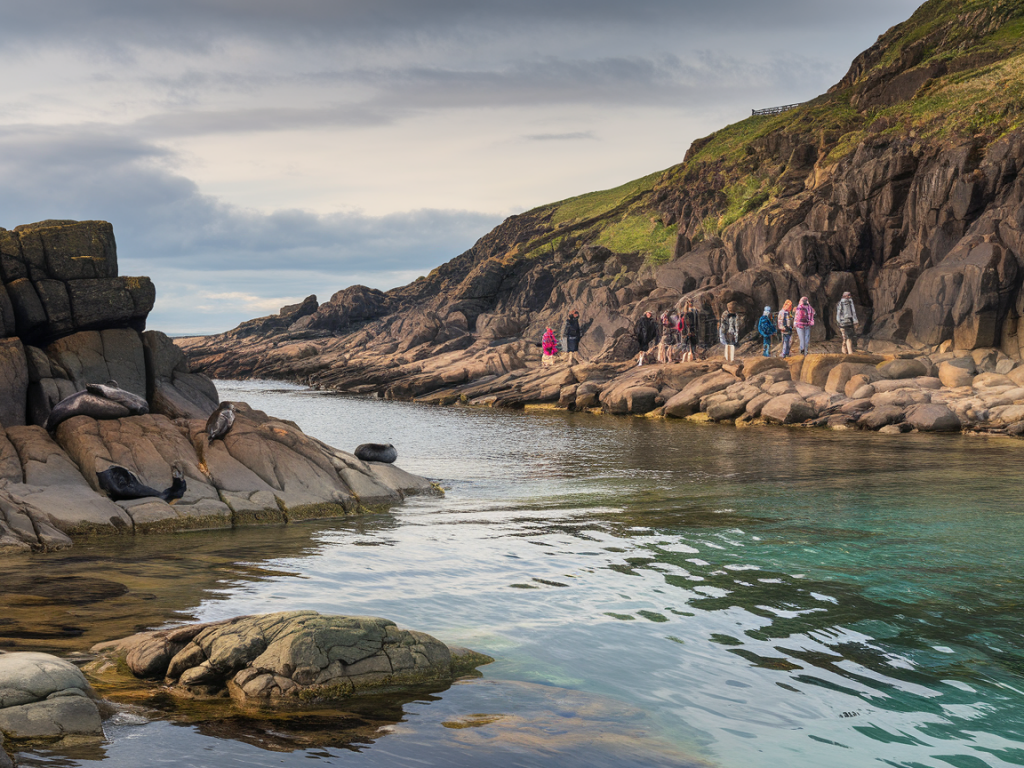
Harbour seals and sometimes grey seals haul out on the rocks and skerries around the coast. I’ve found the best times to see them are early morning and late afternoon when human activity is low and light is kind for photography. Low tide often exposes more rocks where they rest, but you’ll also see them bobbing in the water at any state of the tide.
Key spots along the walk:
Wildlife etiquette and safety
Please stay distant and calm. Seals are easily disturbed—if they haul back into the water they lose valuable rest and energy. My rules of thumb:
For your own safety, avoid getting too close to cliff edges—north-coast cliffs can be undercut and fragile. Also, wet rocks are slippery; I never trust them with my camera bag unless I’m spotting from a stable, grassy vantage.
Photography tips
Here are practical tricks I use to get more intimate-looking photos while keeping a safe distance:
Seasonal notes
Spring and early summer are great for seal pups—look and listen for vocal pups and mothers on quieter days. Autumn brings dramatic light and fewer people; winter offers raw skies and the chance to see large grey seals but it’s colder and windier. I always check tide tables before heading out: certain coves become inaccessible at high tide, and low tide exposes more skerries where seals gather.
Places to eat and stay nearby
After the walk I like to head back to Durness for something warming. The Durness Village Hotel and the local tearooms offer hearty soups, cakes and hot drinks—perfect after salty wind. If you prefer self-catering I’ve camped at Sango Sands Oasis (book ahead in season) and enjoyed evenings watching the light shift along the bay.
Practical tips and safety reminders
This walk has become one of my steady comforts—short enough to fit into a half-day yet rich enough in wildlife and scenery to feel like a proper coastal escape. Take your time, bring binoculars, and keep a quiet watch: the seals will reveal themselves in their own good time, and the coastline will reward you with views and moments you won’t forget.