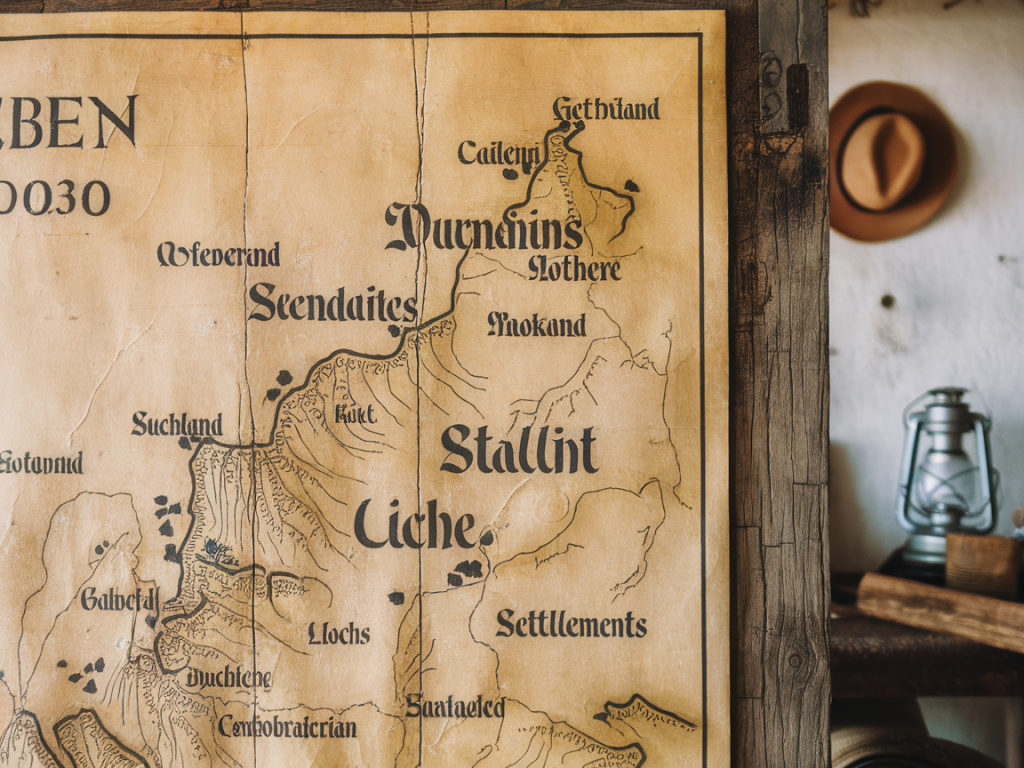
I still remember the first time I unfolded an Ordnance Survey map on a wind-blasted beach in the far north and tried to make sense of the cluster of unfamiliar words around me. Gaelic place names felt like a secret code that locals read like weather charts — telling you where the cliffs were steep, where sheep grazed, where a burn met the sea. Learning to read those names changed how I move through this landscape: they point to hidden coves, warn of boggy ground, and preserve echoes of crofting, saints and Norse settlers.
Why Gaelic place names matter
Place names are shorthand for the past and the landscape. In Durness they’re a mix of Gaelic, Norse and English, layered over centuries of human use. When you learn the vocabulary, a map turns from a patchwork of symbols into a living story: where you’ll find fresh water, which headland faces the worst swell, whether a hill is rocky or grassy, or if a place was once a little churchyard. For a walker or photographer, that’s practical information: names often point you to viewpoints, safe crossing places, or fragile habitats to avoid at certain times of year.
Common Gaelic elements you'll see on Durness maps
Below is a compact guide to the most useful Gaelic words and what they reveal. I keep a printed cheat-sheet in my map case when I’m out exploring.
| Gaelic element | Meaning | Pronunciation hint | What it tells you |
|---|---|---|---|
| Glen / Gleann | Valley | glenn | Follow it for a sheltered route and often a burn or track. |
| Strath / Srath | Wide valley or river plain | strath | Lower, broader valley — often road or habitation present. |
| Beinn / Ben | Mountain / hill | bane | Higher ground — expect ridges and views. |
| Cnoc | Hillock / small hill | knock | Modest elevation, often good for short viewpoints. |
| Loch | Lake / sea inlet | loch (guttural), sometimes lok | Water — look for sheltered anchorages, seal haunts. |
| Allt | Burn / stream | alt | Freshwater and possible fords — route decisions near crossings. |
| Aird / Àird | Promontory / height | aird | Headlands and viewpoints; can be exposed to wind. |
| Bàgh / Bay | Bay or small cove | baye | Beach access and calm water, good for photos or wild swimming. |
| Port | Harbour / landing place | port | Traditional access points from sea; often sheltered. |
| Bal / Baile | Town, farmstead or settlement | bal- | Signs of crofting or communities; places to find a shop or a welcome. |
| Achadh | Field | ah-chugh | Arable or grazed land — easier walking than peat bog. |
| Dubh | Black / dark | doo | Dark rock, deep pools, or peat-stained water. |
| Beag / Mòr | Small / Large | bek / more | Size indicator — e.g., Loch Beag vs Loch Mòr. |
| Lios / Linne | Fort / pool | lees / lin-eh | Archaeological remains or notable water features. |
How names hint at wildlife, people and history
Many names tell you what people used the land for. Words like Baile and Achadh denote farming and crofting. Port or Bàgh indicate landing places where fishermen once set out. Names with Kil or Cille (from cill) reveal church sites — these are often small cemeteries or ruins tucked behind dunes or above headlands.
Animal names sneak in too: look for elements that mean “stag,” “seal” or “otter” — those places are good bets for wildlife watching at dawn or dusk. Colour words such as dubh (black) or bàn (white/pale) describe the rock, sand or peat staining, so if you want golden sands, names that include bàn are worth noting.
And because Durness sits where Gaelic meets Norse, you’ll encounter hybrid names. Norse elements often point to sheltered inlets or islands — originally important for Norse sea routes — while Gaelic names usually describe land features and human use. Together they map the long relationship between sea, shore and croft.
Pronunciation tips so you won’t look lost
Pronouncing place names close enough to be understood is part of showing respect to the landscape and its people. Here are three simple rules I use:
Most locals are delighted when visitors try. If you’re unsure, ask politely — people love sharing the stories behind the names.
Using place names to plan routes and photo spots
Once you can read a few elements, you can plan smarter. For example:
I plan photo walks by scanning for Àird (headlands) paired with Bàgh — they often give dramatic light at sunset and shelter for shooting long exposures. Conversely, names with Dubh or Creag (rock) prepare me for stony compositions and textures rather than soft sand.
Practical map-reading tips
Beyond translation, here are my tried-and-tested habits for using place names responsibly:
Names that led me to my favourite discoveries
Mapping Gaelic names has led me to tiny coves I would never have found by road alone and to ancient dwelling traces hidden in moorland hollows. Once, a map label with Achadh and Allt sent me down a faint track to a freshwater pool framed by yellow gorse and a ruined croft where a skylark sang. Another time, a headland marked Àird Dubh revealed a dramatic black cliff face I’d seen in photos but never reached — and the view at dusk was worth every blow of the wind.
Learning to read Gaelic place names is a long, joyful process rather than an overnight trick. Start with the table above, carry your map, listen to stories, and let the names guide your curiosity. They’re tiny signposts to the natural and human history that make Durness endlessly interesting to explore.

