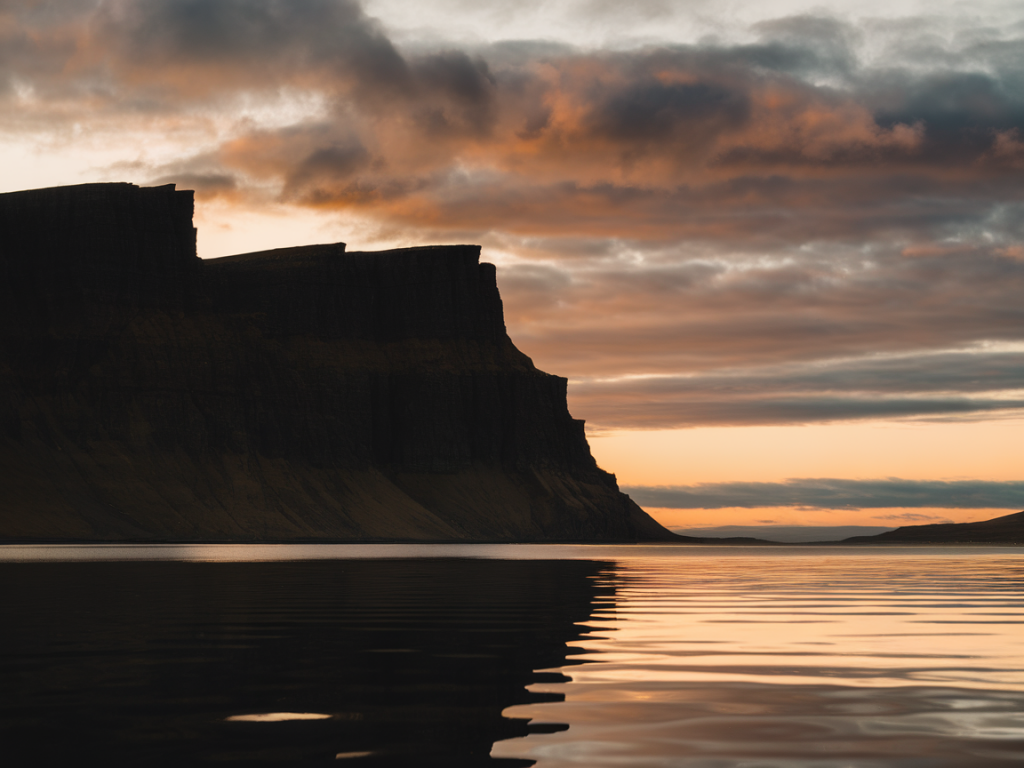
I chase silhouettes. There’s something about a human shape or a jagged cliff cut stark against a soft sunrise or a stormy sky that makes a photograph feel like a story. Around Durness, the light and coastline conspire to create dramatic cliff silhouettes that change mood by the minute—and I’ve spent years finding the spots that reliably deliver those moments. Below I’ve collected the places I return to, how to reach them, and the camera and safety tips that help you come away with keepers.
Sango Bay headland — clean lines and wide horizons
Sango Bay is often my first stop when I’m after clean cliff silhouettes with lots of negative space. The headland to the south of the main beach offers wide sea vistas and a series of stepped cliffs that look fantastic at sunrise and in late afternoon backlight.
Access: Park at the small car park by Sango Sands (watch the signage). There’s a clear coastal path along the dunes, then a steeper track up to the headland. Allow 15–25 minutes on foot.
Why I like it: The cliffs here are relatively low but sculpted, which makes them read well as a silhouette even with a wide-angle lens. On calm days the water becomes a mirror that amplifies the shapes.
Photo tips:
Balnakeil Beach cliffs — isolated stacks and moody backdrops
Balnakeil’s northern end has dramatic sandstone cliffs and small stacks that separate the beach from the open sea. I love this spot for stormy-day silhouettes—the clouds, spray and textured rock make every frame feel cinematic.
Access: Walk north along the sand from the main Balnakeil car park. The cliffs are visible from the path and several informal descent points give you different angles. Be careful: some of the approaches are steep and unstable.
Why I like it: The contrast between the smooth beach and the rough cliff faces makes for strong black-and-white images. In winter, the light can be low and horizontal which accentuates the silhouette.
Photo tips:
Clachtoll point (towards the Sutherland coast) — elevated cliff silhouettes
Clachtoll, a short drive from Durness, is one of my go-to spots when I want higher cliffs and a sense of exposure. The viewpoint above the bay gives you sweeping bends of coastline and distant stacks that silhouette beautifully against a backlit sky.
Access: There’s a small viewpoint by the road and a grassy path leading down towards the headland. Allow 10–20 minutes to reach the best vantage points.
Why I like it: The height lets the sea fall away from the cliff edge in layers. It’s easy to create compositions that include foreground grasses, the cliff edge and distant stacks for depth.
Photo tips:
Faraid Head and Durness headland — classic profiles near town
Close to Durness village, Faraid Head and the adjacent headland are perfect when you want a classic “cliff-profile” against open sea. I often photograph here for editorial work because the shapes are instantly recognisable and accessible.
Access: Short walks from the Durness car parks; paths are well-trodden though occasionally boggy—wear waterproof boots.
Why I like it: Easy access means you can work the light over multiple hours. The headlands also give options for backlit portraits or stark landscape silhouettes.
Photo tips:
Gear and settings I use on the clifftops
Over the years I’ve pared my kit down to what works in the Highlands—light, weatherproof, and versatile:
Safety and respect for the landscape
Cliff photography is as much about situational awareness as it is about composition. I’ve learned to treat the edge with respect—many of the locations here have soft, crumbly ground and hidden undercuts. A few rules I always follow:
Compositional ideas to try
When you’re on the cliff, look for contrasts and layers. Here are compositions I come back to again and again:
If you want specific coordinates, routes or a suggested golden-hour schedule for any of these spots, I’m happy to plan a short itinerary for your visit. I map my favourites on the Hillside Durness Co site and update them with recent access notes—see the Photo Spots section at https://www.hillside-durness.co.uk for maps and my latest route updates.