Why a moonlit beach stay near Durness is worth planning
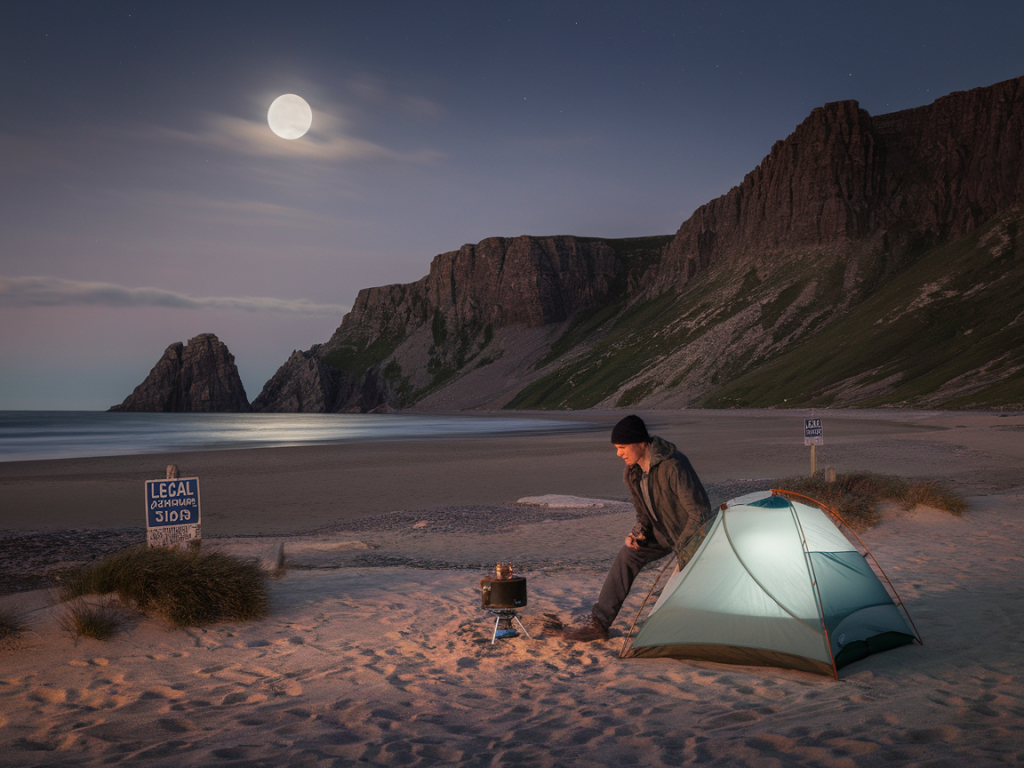
There’s something quietly magical about arriving at a remote Sutherland beach and pitching under a full moon. I’ve spent many nights listening to the surf, watching the light move across sand and rock, and waking to seabirds and distant croft smoke. Those moonlit hours feel like a secret the Highlands keep for those willing to walk a few miles with a pack on their back.
But remote evenings bring real considerations—weather, tides, wildlife, and legal access. Below is the checklist and practical advice I use every time I plan an overnight wild camp near Durness, plus the legal and etiquette points to keep your visit respectful and trouble-free.
Essential checklist — what I pack for a moonlit beach overnight
I always pack with the aim of staying warm, dry and low-impact. This list works for a single night but I treat it as the minimum for safety and comfort.
- Shelter: lightweight tent or bivvy (I often use a Vango Banshee or a small two-person tent so I have room to gear-dry). Groundsheet or footprint for additional protection.
- Sleeping system: three-season sleeping bag (0°C to -5°C comfort for late spring/autumn), insulated sleeping mat (Therm-a-Rest or equivalent), and a small liner for extra warmth.
- Insulation layers: fleece or down jacket, base layers, hat and gloves. Windproof shell is essential; the coast is always colder than inland.
- Footwear: gaiters or waterproof boots for wet beach approaches; lightweight camp shoes for evenings.
- Cooking: small stove (MSR PocketRocket or Jetboil), fuel, lightweight pot, mug, spork. I avoid open fires on beaches—I’ll bring a stove even if tempted by driftwood.
- Water: at least 2 litres to start, plus a filter or purification tablets (Katadyn, Sawyer or Steripen). Freshwater sources aren’t guaranteed.
- Food: calorie-dense, no-mess meals—freeze-dried dinners, oat porridge, nuts, chocolate, and strong tea. Pre-cut veg or dried seaweed if you want local flavour.
- Lighting: headlamp (Petzl), spare batteries, and a small handheld torch. Moonlight is beautiful but doesn’t replace task lighting.
- Navigation: OS map, compass, and a charged phone with offline map (I use ViewRanger/Outdooractive), plus a power bank (I like Anker) and a USB torch if needed.
- First aid & emergency: compact kit, blister plasters, tape, painkillers, plasters, antihistamine, and a small multi-tool. Emergency whistle and shelter (bivvy bag) are staples.
- Weather protection: waterproofs (top and trousers), waterproof bag covers or dry bags for kit, and a lightweight tarp if you want a windbreak.
- Sanitation: trowel for burying human waste (where appropriate), toilet paper in resealable bags (pack out used paper if in fragile dune systems), and hand sanitiser.
- Leave-No-Trace supplies: rubbish bags to carry out all waste, re-sealable bags for food, and a small brush to tuck sand out of gear before packing.
- Safety extras: tide table (paper or app), knowledge of local river fords, and a personal locator beacon (PLB) or inReach device if you go very remote.
Quick gear table — what and why
| Item | Why I bring it |
|---|---|
| Tent / Bivvy | Shelter from wind and rain; sand can be cold at night |
| Insulated mat + warm bag | Insulation from cold ground; crucial for a comfortable sleep |
| Stove + fuel | Safe, reliable hot food and drink — don’t rely on campfires |
| Water filter / tablets | Fresh water isn’t always nearby; treat before drinking |
| Tide maps & headlamp | Plan camping zone away from high tide and have night lighting |
| Waste bags & trowel | Leave-no-trace — pack out rubbish and manage human waste |
Tides, weather and site selection
Choosing the right spot is the most important safety measure. I always check tide times and select a pitch well above the high tide mark with a natural backstop (dune, low cliff or raised shingle bank) to block wind. On some Durness beaches the sand rises sharply at high tide—being careless here can mean losing gear.
Scottish weather changes fast. Even in summer, I expect gusty wind and drizzle. I check Met Office and the BBC forecast before leaving; if strong easterlies are predicted I pick a more sheltered bay or postpone. I also check for river mouth flows—after heavy rain a normally passable ford can become dangerous.
Wildlife and seasonal considerations
Late spring and early summer bring nesting birds—terns, oystercatchers and sometimes ringed plovers—which breed on pebbly and sandy beaches. I avoid camping on or near nesting areas; if you see fenced or signed zones, respect them. July to August can also be busy with seals hauling out—keep a respectful distance and avoid loud noises.
If you’re unsure, ask a local ranger or crofter. I’ve had invaluable advice from crofters about sensitive areas and safe camping spots.
Legal considerations and access rules
Scotland’s Land Reform (right to roam) and the Scottish Outdoor Access Code generally allow responsible wild camping on most unenclosed land, including many coastal areas. That said, there are important caveats:
- You must camp responsibly—leave no trace, avoid enclosed fields with livestock, and keep groups small.
- There are local byelaws in some places (Loch Lomond & The Trossachs, parts of Argyll, etc.) that prohibit or restrict camping; check local authority websites. For Durness and much of Sutherland there are usually no restrictive byelaws, but always verify.
- Respect crofters and land managers—seek permission if you want to camp close to buildings or infrastructure or if the land is clearly managed (silage, deer fences, etc.).
- Open fires are often prohibited on beaches due to erosion, danger to wildlife, and the risk they pose to grassy dunes—use a stove.
- Pack out all rubbish, including toilet paper. Where burying human waste, dig small catholes at least 30m from water and well away from paths and beach access points; in busy or sensitive areas pack it out.
If in any doubt, phone the local council or the tourist information in Durness. I also check community Facebook groups or the Hill walkers’ pages for recent reports—locals often post temporary notices about nesting birds or access problems.
Practical tips I’ve learned the hard way
- Always bring a small rope and pegs to secure guy lines; gusts around Durness can topple a poorly anchored tent.
- Store food in airtight containers and away from the tent to avoid attracting birds or curious foxes.
- Set up camp late enough that you don’t disturb other beach users during the day, but early enough that you have light for pitching and drying gear.
- Take photos of your access route after arrival so you can retrace your steps in low light or soft sand.
- If you’re alone, tell someone your plan—route, likely return time, and your vehicle location—and check in when you’re back.
Contacts and where to find out more
Before you leave I check:
- Met Office for weather
- Scottish Outdoor Access Code online for rules
- Highland Council website for any local restrictions
- Local Durness ranger or tourist info for seasonal advice
When I follow these practical steps, a moonlit beach camp becomes one of the most restorative experiences the Highlands offer—wild, quiet and kind to the land. If you’d like, I can recommend a few favourite moonlit beaches near Durness and give route notes for access and parking.